
15 July, 2019


20 February, 2016
Hands-on Using Green Screen
This Thursday (25 February) we'll be using #GreenScreen. Back- projections available will be a car, beach train, woods -...
Posted by Southport MovieMakers on Saturday, 20 February 2016
08 February, 2016
NEW Comedy-Drama "The Grower"
NEW film "The Grower" in production. Topical and humourous. What is being grown? That's a mystery for now, at least. pic.twitter.com/uBU03alt8j
— SouthportMovieMakers (@SouthportMM) February 8, 2016
30 October, 2015
Book Review: Screenwriting
In our Club Library, we have a range of books which members may borrow to enhance their knowledge of film-making; and, potentially, their actual film production skills.
One of the books in the collection is Story: Substance, structure, style, and the principles of screenwriting by Robert McKee. Club member, Michael Alley, below presents a review of this particular book:
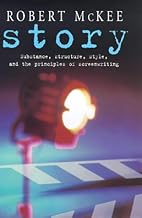
One of the books in the collection is Story: Substance, structure, style, and the principles of screenwriting by Robert McKee. Club member, Michael Alley, below presents a review of this particular book:
Robert McKee’s work almost exclusively encompasses many TV
series but no major films; yet this book and his three-day story writing course
are acclaimed worldwide as the best available, and many well-known films have
been written by attendees at his courses.
The book runs to over 460 pages and it could not, by any means,
be considered as an easy read. It is full of examples of techniques to help one
develop one’s story or progress it when one becomes ‘stuck’. The filmography of quoted examples itself runs
to over 30 pages of two line entries.
“Of the total creative
effort represented in a finished work, 75% or more of a writer’s labor( sic. .
he is an American !) goes into designing (the ?) story. Who are these characters?
What do they want? Why do they want it? How do they go about getting it? What
stops them? What are the consequences?
Finding the answers to these grand questions and shaping them into (a?)
story is our overwhelming creative task.”
The book is divided into four parts each of which has
several chapters: The Writer and the Art of Story; The Elements of Story; The
Principles of Story Design and The Writer at Work.
He sets out 25 different film genres – most of us would
struggle to reach anywhere near that total – then he sets out three levels of
conflict which the main character , or protagonist as he calls her/him will
exhibit and which we need to enunciate and understand in order to know how our
protagonist will react or make decisions at various points in the story – (
heavyweight stuff , this !!) It is the gap between what the protagonist wants
and the achievement he aims for which
involves the three levels of conflict. Many gaps are obvious – Lovers will meet
– a detective will have suspects to identify and so on; and so those gaps won’t surprise the
audience. It is how the gaps are twisted unexpectedly which will grip the
audience and carry it along . [This is
surely a pointer to the editing process – get rid of obvious things which add
nothing to the story?]
McKee points out that many ‘turning points’ (see those set
out by Snyder below) revolve around choices but – if we have developed our
characters properly, there really are no
choices. The choice they will make is so
obvious there is no choice at all. The good guy will do the right thing and the
villain won’t ! It is the dilemma of the choice which is more
important – the lesser of two evils or a choice between irreconcilable
goods. Again, such points seem obvious
when they are brought to our attention by an expert but are often overlooked at
our amateur level as we try to write our scripts.
“William Goldman
argues that the key to all story endings is to give the audience what it wants,
but not the way it expects.”
Again this truism may seem obvious
but when some amateur films do not always fulfil the basics of a recognisable beginning,
a middle and an end; let alone the more fulfilling skeleton set out by the
equally respected Blake Snyder in ‘Save the Cat’ of:
1. Opening
Image
2. Theme Stated
3. Set-Up
4. Catalyst
5. Debate
6. Break into Two
7. B Story
8. Fun and Games
9. Midpoint
10. Bad Guys Close In
11. All Is Lost
12. Dark Night of the Soul
13. Break into Three
14. Finale
15. Final Image
2. Theme Stated
3. Set-Up
4. Catalyst
5. Debate
6. Break into Two
7. B Story
8. Fun and Games
9. Midpoint
10. Bad Guys Close In
11. All Is Lost
12. Dark Night of the Soul
13. Break into Three
14. Finale
15. Final Image
. . .then it is sometimes difficult to believe that even an
approximate structure has been followed.
The book is a good but long treatise. If you have the time it
is worth reading (I wouldn’t have the
audacity to say otherwise ) but to be honest there are shorter, more concise
books on the subject which may be better suited to the amateur level of
expertise.
Blake Snyder's books Save the Cat! Strikes Back: More Trouble for Screenwriters to Get into ... & Out of and Save The Cat! The Last Book on Screenwriting that You'll Ever Need are also available in the Club Library.
30 June, 2015
Successful Recruitment Day
Thank you to @AtkinsonThe for hosting our Recruitment Day last Saturday 27 June. Very successful - 15 potential new members signed-up.
— SouthportMovieMakers (@SouthportMM) June 30, 2015
19 June, 2015
Meet Club Members
Are you coming to our public #event at @AtkinsonThe Sat 27 June? Chat with our #film-makers. http://t.co/0JYbgGu3gY pic.twitter.com/NOlHE8BLdb
— SouthportMovieMakers (@SouthportMM) June 19, 2015
08 March, 2015
We Say Goodbye to Valued Club Member Paul Bagshaw
Southport MovieMakers lost a dynamic and creative member with the death in February of Paul Bagshaw. The following obituary has been compiled by Club member Tony Glynn.
Paul, who was 77, was a retired art teacher and an accomplished artist in his own right. He was astonishingly active on several creative fronts. He had a wide education in art being trained at Southport College of Art and Liverpool College of Art and he held a Master's degree in Education from Cardiff University.
His teaching career began at St John Rigby RC Grammar School, Wigan, then he became Head of Art and Deputy Head at St. Richard's RC School, Skelmersdale. Latterly, he was Director of the Sixth Form at Ruffwood School, Kirkby.
As an administrator in local education, he was a governor of two primary schools and of his old school, King George the Fifth College, Southport. He was also active in the college's Old Georgians Association.
He was keenly interested in football and was a selector for Lancashire Under-15 Schoolboys and England Under-15 Schoolboys.
A further string to his bow was his ability in the music field. He wrote seven musicals and 230 songs, several of which were performed on radio and TV and with the Royal Liverpool Philharmonic Society.
Paul was also a prolific and entertaining author. He wrote a number of novels and a three volume autobiography.
His first ventures into filming were made with teams of his pupils and his interest expanded to become an important part of his life. I once asked him why he did not concentrate more on his own painting and he said film was now his absorbing art form.
After his school career, he set up the Channel Ten Video Company, specialising in educational programmes and expanding to cover medical and business videos and productions dealing with leisure, conference and hotel accommodation. Another venture was Artworks, producing prints of work by local artists.
His output of club and personal productions was extremely varied and highly competent. It ran the gamut from comedy to a documentary on a former Nazi death camp as well as a selection of short dramas such as "The Mirror" and "Fork in the Road", to mention only two.
He was not afraid to aim high, as in the creation of a full scale feature, "Four Days", dealing with intrigue and villainy in a family involved in business. It was the result of much effort put in by a team he gathered made up of writers, technicians and actors, some of whom were professionals or semi-professionals who happily donated their talents.
A meticulous planner, he took great pains with his productions. When producing the Club's film version of a short story by myself, "The Edge of the Storm", he not only made a scale model of the main location to facilitate action, he was virtually a one-man props department, making a series of convincing dummy rifles from some children's cricket bats; devising German army uniforms and even discovering Regan, an intimidating looking - but wholly lovable - ex-police dog, as an extra.
The film, directed by Paul's good friend, David Town, won the Best Overseas Production award in the annual Bare Bones Amateur Movie Festival in Muskogee, Oklahoma. It beat entries from Canada, Mexico and the United Kingdom, to earn the Southport Society's first overseas award.
Paul did the Society a service by bringing in some new, enthusiastic and youthful blood in the form of a group of young people in whom he nurtured their individual talents for filming. One of them, Lewis Simpson, spoke for all of them saying "Without Paul, some of the features and short films Andy, Mickey, Sean, Nigel, myself and the rest made would not have been made or receive the amount of exposure of support they did. It was his passion and support that drove me to make more films and create something that he would enjoy and respond to. He will be missed."
A testimonial from a former member of Southport Moviemakers, Michael, read at Paul's funeral, recorded his gratitude to Paul for his encouragement and support which led to Michael winning a £5,000 film-making prize and an offer of an internship. "I don't know where I'd be right now without Paul's help", he said.
Paul who was a bachelor, was overtaken by illness quite suddenly and was working in film almost to the last, creating a series of fascinating short studies of aspects of art, that other great love of his life.
His funeral was on March 2 with Requiem Mass at the Church of Our Lady of Lourdes. Birkdale, Southport, where an eloquent eulogy on Paul's life and achievements was spoken by his old friend and teaching colleague, Brian Lewis. There was a privately attended committal at Southport Crematorium.


Paul, who was 77, was a retired art teacher and an accomplished artist in his own right. He was astonishingly active on several creative fronts. He had a wide education in art being trained at Southport College of Art and Liverpool College of Art and he held a Master's degree in Education from Cardiff University.
His teaching career began at St John Rigby RC Grammar School, Wigan, then he became Head of Art and Deputy Head at St. Richard's RC School, Skelmersdale. Latterly, he was Director of the Sixth Form at Ruffwood School, Kirkby.
As an administrator in local education, he was a governor of two primary schools and of his old school, King George the Fifth College, Southport. He was also active in the college's Old Georgians Association.
He was keenly interested in football and was a selector for Lancashire Under-15 Schoolboys and England Under-15 Schoolboys.
A further string to his bow was his ability in the music field. He wrote seven musicals and 230 songs, several of which were performed on radio and TV and with the Royal Liverpool Philharmonic Society.
Paul was also a prolific and entertaining author. He wrote a number of novels and a three volume autobiography.
His first ventures into filming were made with teams of his pupils and his interest expanded to become an important part of his life. I once asked him why he did not concentrate more on his own painting and he said film was now his absorbing art form.
After his school career, he set up the Channel Ten Video Company, specialising in educational programmes and expanding to cover medical and business videos and productions dealing with leisure, conference and hotel accommodation. Another venture was Artworks, producing prints of work by local artists.
His output of club and personal productions was extremely varied and highly competent. It ran the gamut from comedy to a documentary on a former Nazi death camp as well as a selection of short dramas such as "The Mirror" and "Fork in the Road", to mention only two.
He was not afraid to aim high, as in the creation of a full scale feature, "Four Days", dealing with intrigue and villainy in a family involved in business. It was the result of much effort put in by a team he gathered made up of writers, technicians and actors, some of whom were professionals or semi-professionals who happily donated their talents.
A meticulous planner, he took great pains with his productions. When producing the Club's film version of a short story by myself, "The Edge of the Storm", he not only made a scale model of the main location to facilitate action, he was virtually a one-man props department, making a series of convincing dummy rifles from some children's cricket bats; devising German army uniforms and even discovering Regan, an intimidating looking - but wholly lovable - ex-police dog, as an extra.
The film, directed by Paul's good friend, David Town, won the Best Overseas Production award in the annual Bare Bones Amateur Movie Festival in Muskogee, Oklahoma. It beat entries from Canada, Mexico and the United Kingdom, to earn the Southport Society's first overseas award.
Paul did the Society a service by bringing in some new, enthusiastic and youthful blood in the form of a group of young people in whom he nurtured their individual talents for filming. One of them, Lewis Simpson, spoke for all of them saying "Without Paul, some of the features and short films Andy, Mickey, Sean, Nigel, myself and the rest made would not have been made or receive the amount of exposure of support they did. It was his passion and support that drove me to make more films and create something that he would enjoy and respond to. He will be missed."
A testimonial from a former member of Southport Moviemakers, Michael, read at Paul's funeral, recorded his gratitude to Paul for his encouragement and support which led to Michael winning a £5,000 film-making prize and an offer of an internship. "I don't know where I'd be right now without Paul's help", he said.
Paul who was a bachelor, was overtaken by illness quite suddenly and was working in film almost to the last, creating a series of fascinating short studies of aspects of art, that other great love of his life.
His funeral was on March 2 with Requiem Mass at the Church of Our Lady of Lourdes. Birkdale, Southport, where an eloquent eulogy on Paul's life and achievements was spoken by his old friend and teaching colleague, Brian Lewis. There was a privately attended committal at Southport Crematorium.
Edge of the Storm Club Production
Written by Tony Glynn and produced by Paul Bagshaw.
Two photographs of Paul at work on Club production "The Will"
Download PDF of Paul Bagshaw's Obituary
04 February, 2015
TITANIC – FACT OR FICTION?
Since the sinking of the SS TITANIC in April 1912, something over seventy films, documentaries and newsreels have been produced telling the story. In several of these films, the ship's fate is almost incidental as it gives way to a love story, a story of heroism or a means of Nazi propoganda.
On Thursday 5 February, Les Thomas will travel those hundred years on the Titanic, using excerpts from many of those films, from the first silent film, made just days after the sinking, to the James Cameron blockbuster of 1997.

What will become clear is that several of these films have created and perpetuated myths about the TITANIC, and in the course of the evening we will try to separate the reality from the fantasy.
On Thursday 5 February, Les Thomas will travel those hundred years on the Titanic, using excerpts from many of those films, from the first silent film, made just days after the sinking, to the James Cameron blockbuster of 1997.

What will become clear is that several of these films have created and perpetuated myths about the TITANIC, and in the course of the evening we will try to separate the reality from the fantasy.
Day: Thursday 5 February
Time: 8 pm – 10.00 pm
Location: St James' Church Hall,
Lulworth Road, Southport, PR8 2BQ.
@SouthportMM You're welcome, great idea for an event
— Andrew Brown (@visandrewbrown) January 31, 2015
30 June, 2014
How to Develop Your Film Ideas
At a Club meeting in June, Alex Montague, the Club Programme Secretary, made a presentation to the members on the subject of Developing Ideas in Film-making: How to create a story? You can see the presentation below. Use the practical ideas in the presentation to help your own film projects.
29 June, 2014
Summer Break
The Club is now taking its summer break for July and August. However, the Committee will be continuing working in the background in preparation for the NEW 2014/15 year.
18 June, 2014
Success at Bolton Movie Challenge 2014
One of the positive elements about being part of a network of clubs nationally via the Institute of Amateur Cinematographers (IAC) is that, on a regular basis, we have the opportunity of competing with one another. Cumulatively, this contributes to raising standards, as does competition in any field.
On 22 May, Southport MovieMakers competed against 7 other clubs from around the North West in a competition entitled the Bolton Movie Challenge, hosted by Bolton MovieMakers. We won.
Our winning film was our recent production, Ransom, directed by our recently-deceased highly-talented member Nigel Barton. Our Chairman, Peter Ravenscroft, said when he spoke receiving the award, that it was "entirely fitting" that Nigel's talent should be recognised with this success. Once again, the success is a tribute to Nigel's talent. Moreover, it is a tribute to the team effort that contributed to the success of Ransom.
On 22 May, Southport MovieMakers competed against 7 other clubs from around the North West in a competition entitled the Bolton Movie Challenge, hosted by Bolton MovieMakers. We won.
Our winning film was our recent production, Ransom, directed by our recently-deceased highly-talented member Nigel Barton. Our Chairman, Peter Ravenscroft, said when he spoke receiving the award, that it was "entirely fitting" that Nigel's talent should be recognised with this success. Once again, the success is a tribute to Nigel's talent. Moreover, it is a tribute to the team effort that contributed to the success of Ransom.
If you would like to become a member of Southport MovieMakers and actively contribute to our future success, please contact us:
14 June, 2014
You Can Teach an Old Dog New Tricks
A great strength of Southport MovieMakers in that it mixes together the energy of youth with a foundation of many years of experience of film-making. For example, our newly-appointed Programme Secretary, Alex Montague is a very recent Film graduate from Edge Hill University and another newly-appointed member of the Management Committee, our Publicity & Recruitment Officer, Sarah Pollitt, has just finished the second year of her undergraduate degree at Liverpool University. At the other extreme, our older members are well into their retirement years. Older and younger film-makers have much to offer each other.
In recognition of many years of contributing to the life of the Club in so many ways, Ashby Ball, Geoff Williams and Jim Morris earlier this year were awarded Honorary Life Memberships of the Club.
In addition, last month, Paul Bagshaw, another of our older, highly-experienced members became the first recipient of the NEW Nigel Barton Trophy, in recognition of his skill as a film-maker. This award was created in the wake of the recent death of our valued member Nigel Barton.

In this age when older people are sometimes overlooked, it is important to recognise and celebrate the skills and knowledge that older people bring from a lifetime of experience. In this context, it is interesting to note that Channel 4 is currently acknowledging the value of older people in their series Mary's Silver Service.
In recognition of many years of contributing to the life of the Club in so many ways, Ashby Ball, Geoff Williams and Jim Morris earlier this year were awarded Honorary Life Memberships of the Club.
In addition, last month, Paul Bagshaw, another of our older, highly-experienced members became the first recipient of the NEW Nigel Barton Trophy, in recognition of his skill as a film-maker. This award was created in the wake of the recent death of our valued member Nigel Barton.
Paul Bagshaw
In this age when older people are sometimes overlooked, it is important to recognise and celebrate the skills and knowledge that older people bring from a lifetime of experience. In this context, it is interesting to note that Channel 4 is currently acknowledging the value of older people in their series Mary's Silver Service.
Ashby Ball and Geoff Williams - Founder Members of Southport MovieMakers
Whether you're in your 20s or your 80s,
you can always learn new things.
13 June, 2014
Success for Burnley at Inter-club Competition 2014
Last Thursday, 5 June, at our annual Inter-club Competition, Burnley Film Makers walked away with the trophy for their winning documentary film 'Antiques Roadshow', looking at when the BBC programme visited Towneley Hall near Burnley in Lancashire. It is to the immense credit of the Burnley club that they managed to acquire significant behind-the-scenes access to the BBC staff, including the Production Manager, the presenter Fiona Bruce and the programme's producer, Michele Burgess.
Congratulations to Burnley!!
Congratulations to Burnley!!
06 June, 2014
Club Launches NEW Library for Members
Southport MovieMakers is pleased to announce the launch of a NEW Club Library for members. The Club is able to do this due to receiving a substantial donation of books arising from the death of its recently-deceased highly valued member Nigel Barton.
The books cover a range of aspects of film-making including screenwriting, producing and directing. The members will benefit greatly from being able to consult these sources in the development of future Club productions. The Library will be another facet of the significant legacy left by Nigel within Southport MovieMakers and the Club thanks Nigel's family very much for this donation.
The books cover a range of aspects of film-making including screenwriting, producing and directing. The members will benefit greatly from being able to consult these sources in the development of future Club productions. The Library will be another facet of the significant legacy left by Nigel within Southport MovieMakers and the Club thanks Nigel's family very much for this donation.
"The Machine Stops" - Premiere
On 12 June, our member Michael Alley will be presenting the premiere of his new film The Machine Stops, based on E.M. Forster's book of the same title.
The story describes a world in which most of the human population has lost the ability to live on the surface of the Earth. Each individual now lives in isolation below ground in a standard 'cell', with all bodily and spiritual needs met by the omnipotent, global Machine. Travel is permitted but unpopular and rarely necessary. Communication is made via a kind of instant messaging/video conferencing machine called the speaking apparatus, with which people conduct their only activity, the sharing of ideas and what passes for knowledge.
The story begins…..
Imagine, if you can, a small room, hexagonal in shape, like the cell of a bee. It is lighted neither by window nor by lamp, yet it is filled with a soft radiance. There are no apertures for ventilation, yet the air is fresh. Read more.
Forster was concerned about human dependence on technology. Although the book was published in 1909, it is just as relevant today as it was back in 1909. Perhaps even moreso. Consider the Internet.
Members are encouraged to attend this evening to support the screening of Michael’s new film.
The story describes a world in which most of the human population has lost the ability to live on the surface of the Earth. Each individual now lives in isolation below ground in a standard 'cell', with all bodily and spiritual needs met by the omnipotent, global Machine. Travel is permitted but unpopular and rarely necessary. Communication is made via a kind of instant messaging/video conferencing machine called the speaking apparatus, with which people conduct their only activity, the sharing of ideas and what passes for knowledge.
The story begins…..
Imagine, if you can, a small room, hexagonal in shape, like the cell of a bee. It is lighted neither by window nor by lamp, yet it is filled with a soft radiance. There are no apertures for ventilation, yet the air is fresh. Read more.
Forster was concerned about human dependence on technology. Although the book was published in 1909, it is just as relevant today as it was back in 1909. Perhaps even moreso. Consider the Internet.
Members are encouraged to attend this evening to support the screening of Michael’s new film.
31 May, 2014
Inter-club Competition 2014
On 5 June, this year's Inter-club Competition will take place. Since 1967, Southport MovieMakers has been hosting an annual Inter-club Competition between clubs from around the North West. The clubs taking part this year will be:
In the past, the organisation of the event has been shared between all of the participating clubs. However, this year Southport MovieMakers is proud to be the sole organiser and host of the event.

- Morecambe Bay Movie Makers
- Swan Movie Makers
- Southport MovieMakers
- Bolton MovieMakers
- Preston MovieMakers
- Burnley Film Makers
In the past, the organisation of the event has been shared between all of the participating clubs. However, this year Southport MovieMakers is proud to be the sole organiser and host of the event.
Inter-club Competition 2014
18 May, 2014
Club Year - Summer 2014
This year, the Club, rather than breaking at the end of July, will be finishing the year at the end of June. Enjoy your summer break.
Review of the Year
A key event takes place on 29 May. That event is the Review of the Year. It is the members' opportunity to express their views:
If there is anything that could be improved, now is your chance to have your say.
With the commencement of the new Club year 2014/15, the new Committee has started work and our new Programme Secretary, Alex Montague, has begun work on developing the Programme for 2014/15. But your input is crucial to make the Club relevant to its members - YOU.

- What you liked about the last year?
- What you DIDN'T like about the last year?
- What you'd like to see more of in the future?
- Is there anything you'd like the Club to do that we haven't done before?
- Would you like to hear external speakers? If so, on what subjects?
- What technical skills do you want to learn more about?
If there is anything that could be improved, now is your chance to have your say.
With the commencement of the new Club year 2014/15, the new Committee has started work and our new Programme Secretary, Alex Montague, has begun work on developing the Programme for 2014/15. But your input is crucial to make the Club relevant to its members - YOU.

Alex Montague
NEW Programme Secretary
If you can't get to the meeting on 29 May, contact Alex directly:
Remember, it is your Club.
Make it Relevant to You.
Bolton Movie Challenge
As the Club is not meeting next Thursday (22 May) on account of the local and Euro elections, members are encouraged to attend the Bolton Movie Challenge. If you would like to attend, please register below, so that we can organise the travel arrangements.
18 April, 2014
Jaws is the Last of the Great Disaster Films of the 1970s
Earlier this year, we presented an evening dedicated to that memorable film, Jaws. Here, our Chairman, Peter Ravenscroft, presents his personal appreciation of this landmark film.
Jaws is the last of the great disaster films of the 1970s. In an era of intense paranoia on both sides of the Atlantic, the disaster genre fulfilled the cathartic needs of its audience, pitting vulnerable humanity against the seemingly unstoppable forces of nature. Films like The Poseidon Adventure (1972), The Towering Inferno (1974), Earthquake (1974) and many more demonstrated man’s resilience in the face of danger. The key message? Do your worst because mankind is here to stay!
With the USA’s ultimate withdrawal from Vietnam in the mid-1970s, the disaster genre began to wane; the predominant source of tension and division that fuelled the insecurity of a nation had been relieved. Almost. However, with one final and masterful flourish in Steven Spielberg’s Jaws, mankind once again found itself out of its depth and in the teeth of trouble.
A film adaptation of Peter Benchley’s novel had been mooted before the ink was even dry on the manuscript. The author had been struck with inspiration while holidaying at the beach, positing the idea of a giant shark snacking on oblivious bathers. He also found a genuine horror story from history: along the New England coast in the summer of 1916, a single shark had fatally attacked four bathers in the space of a week. The nightmare scenario was all too plausible.
Producers Zanuck and Brown at Universal were keen to tackle the project if they could find the right director. Spielberg was not their first choice but was drafted in following a notorious meeting in which the initial director outlined his vision for the opening shots of the film, describing how the “whale” would lunge from the water to helpless screams from the terrified audience.
Zanuck and Brown also found they had bit off more than they could chew, having believed that a great white shark, the nominal star of the film, could be tamed and trained in much the same way as the birds had in Hitchcock’s picture. They were soon put straight on that matter.
The production hell that became Jaws has been well documented and will not be repeated here, save to say that the film that ultimately kick-started Spielberg’s career could easily have seen it sink without trace, as the movie’s allocated budget spiralled out of control and genuine forces of nature, namely the ocean, caused shooting schedules to be delayed over and over again. Anyone interested in reading a first-hand account of the turbulent production should track down a copy of screenwriter Carl Gottlieb’s The Jaws Log and marvel at the miracle of the film’s ultimate completion.
Triumph over adversity is evident in the film’s ultimate success. Jaws broke box office records for 1975, becoming the first film in history to earn over $100m at the box office. It is also the movie credited with spawning the summer blockbuster; event films with a wide opening designed to attract massive audiences across the globe. It was also one of the most heavily merchandised films of the pre-Star Wars era, although Spielberg himself vetoed the idea of shark shaped jelly sweets that oozed red goo when bitten into.
My first encounter with the twenty-five foot behemoth of cinema legend occurred in 1985, ten years after the film’s release, when it was shown on terrestrial television. I cried. Not at the severed limbs, devoured children or blood and gore. No. I blubbed when the shark was blown to smithereens. I was only five at the time, by the way, and already rooting for the screen villain; a trait which continues to this day, but that’s another story.
Since then, I have been captivated by the film. Its storyline, its ingenuity, its characters. Its soul. Jaws is more than just a film; it is a phenomenon, a cultural icon. I have watched its sequels countless times. Yes, even the risible Jaws 3 and the nadir of the franchise, Jaws: The Revenge – although I still experienced a frisson at seeing one of the full size shark props from the latter on the back lot of the Universal Studios tour in the early 90s.
Another of the most captivating aspects of the film were its three leads: Chief Brody, played by the late Roy Scheider, Matt Hooper the young oceanographer, played by Richard Dreyfuss, and most laudable of all, the grizzled shark hunter and USS Indianapolis survivor Quint, played by Robert Shaw. Why Robert Shaw in particular? I’ll tell you in a moment.
Difficult though it is to imagine the part of Quint without the British character actor and playwright in the role, Shaw was not the first choice for the part of Quint. Charlton Heston was interested, although it was felt that his presence would be too big a name and would distract from the film itself.
Lee Marvin was approached but, as an avid big game fisherman himself, declared he would rather be out catching real big fish than stuck in a water tank shooting a film about them.
Spielberg advocated Sterling Hayden but he was not interested in the part either. And so, eventually, the part was offered to Shaw. Spielberg felt the actor’s considerable stature and screen presence would provide a believable human foil for the bloodthirsty denizen of the deep.
So why my interest in Robert Shaw? Simple. From a very early age, I’ve been fascinated by the dead. No really. My parents will tell you that my first question regarding any actor or singer upon first encountering their works would be, “Are they dead?” or its variant, “Are they still alive?” Robert Shaw was one of the first famous faces on the receiving end of my morbid questioning to receive the answer, “Yes. I think he is.” In fact, Shaw died in 1978, only three years after the success of Jaws. He fell ill while driving with his family through County Mayo in Ireland, stopped the car and suffered a fatal heart attack at the roadside. A memorial to him stands in County Mayo.
Any movie buffs in Lancashire and the surrounding area may be interested to know that Robert Shaw was born in Westhoughton, and a pub called The Robert Shaw, part of the JD Wetherspoon chain, can be patronised in the town.
The actor remains fondly remembered for his colourful portrayal of Quint in Jaws but also for his terrifying portrayal of one of the very best James Bond villains, Donald ‘Red’ Grant in From Russia With Love (1963), a young Henry VIII in A Man For All Seasons (1966), and for his star turn as gangster Doyle Lonnegan in The Sting (1973). One of his final film roles was as Romer Treece in another Peter Benchley adaptation The Deep (1977).
For a generation of movie-goers, Jaws remains one of the finest films ever made, mixing genuine thrills with human drama. It is far more than just a monster movie and remains a landmark in cinema history.
Oh, and then there’s that theme tune…
Jaws is the last of the great disaster films of the 1970s. In an era of intense paranoia on both sides of the Atlantic, the disaster genre fulfilled the cathartic needs of its audience, pitting vulnerable humanity against the seemingly unstoppable forces of nature. Films like The Poseidon Adventure (1972), The Towering Inferno (1974), Earthquake (1974) and many more demonstrated man’s resilience in the face of danger. The key message? Do your worst because mankind is here to stay!
With the USA’s ultimate withdrawal from Vietnam in the mid-1970s, the disaster genre began to wane; the predominant source of tension and division that fuelled the insecurity of a nation had been relieved. Almost. However, with one final and masterful flourish in Steven Spielberg’s Jaws, mankind once again found itself out of its depth and in the teeth of trouble.
A film adaptation of Peter Benchley’s novel had been mooted before the ink was even dry on the manuscript. The author had been struck with inspiration while holidaying at the beach, positing the idea of a giant shark snacking on oblivious bathers. He also found a genuine horror story from history: along the New England coast in the summer of 1916, a single shark had fatally attacked four bathers in the space of a week. The nightmare scenario was all too plausible.
Producers Zanuck and Brown at Universal were keen to tackle the project if they could find the right director. Spielberg was not their first choice but was drafted in following a notorious meeting in which the initial director outlined his vision for the opening shots of the film, describing how the “whale” would lunge from the water to helpless screams from the terrified audience.
Zanuck and Brown also found they had bit off more than they could chew, having believed that a great white shark, the nominal star of the film, could be tamed and trained in much the same way as the birds had in Hitchcock’s picture. They were soon put straight on that matter.
The production hell that became Jaws has been well documented and will not be repeated here, save to say that the film that ultimately kick-started Spielberg’s career could easily have seen it sink without trace, as the movie’s allocated budget spiralled out of control and genuine forces of nature, namely the ocean, caused shooting schedules to be delayed over and over again. Anyone interested in reading a first-hand account of the turbulent production should track down a copy of screenwriter Carl Gottlieb’s The Jaws Log and marvel at the miracle of the film’s ultimate completion.
Triumph over adversity is evident in the film’s ultimate success. Jaws broke box office records for 1975, becoming the first film in history to earn over $100m at the box office. It is also the movie credited with spawning the summer blockbuster; event films with a wide opening designed to attract massive audiences across the globe. It was also one of the most heavily merchandised films of the pre-Star Wars era, although Spielberg himself vetoed the idea of shark shaped jelly sweets that oozed red goo when bitten into.
My first encounter with the twenty-five foot behemoth of cinema legend occurred in 1985, ten years after the film’s release, when it was shown on terrestrial television. I cried. Not at the severed limbs, devoured children or blood and gore. No. I blubbed when the shark was blown to smithereens. I was only five at the time, by the way, and already rooting for the screen villain; a trait which continues to this day, but that’s another story.
Since then, I have been captivated by the film. Its storyline, its ingenuity, its characters. Its soul. Jaws is more than just a film; it is a phenomenon, a cultural icon. I have watched its sequels countless times. Yes, even the risible Jaws 3 and the nadir of the franchise, Jaws: The Revenge – although I still experienced a frisson at seeing one of the full size shark props from the latter on the back lot of the Universal Studios tour in the early 90s.
Another of the most captivating aspects of the film were its three leads: Chief Brody, played by the late Roy Scheider, Matt Hooper the young oceanographer, played by Richard Dreyfuss, and most laudable of all, the grizzled shark hunter and USS Indianapolis survivor Quint, played by Robert Shaw. Why Robert Shaw in particular? I’ll tell you in a moment.
Difficult though it is to imagine the part of Quint without the British character actor and playwright in the role, Shaw was not the first choice for the part of Quint. Charlton Heston was interested, although it was felt that his presence would be too big a name and would distract from the film itself.
Lee Marvin was approached but, as an avid big game fisherman himself, declared he would rather be out catching real big fish than stuck in a water tank shooting a film about them.
Spielberg advocated Sterling Hayden but he was not interested in the part either. And so, eventually, the part was offered to Shaw. Spielberg felt the actor’s considerable stature and screen presence would provide a believable human foil for the bloodthirsty denizen of the deep.
So why my interest in Robert Shaw? Simple. From a very early age, I’ve been fascinated by the dead. No really. My parents will tell you that my first question regarding any actor or singer upon first encountering their works would be, “Are they dead?” or its variant, “Are they still alive?” Robert Shaw was one of the first famous faces on the receiving end of my morbid questioning to receive the answer, “Yes. I think he is.” In fact, Shaw died in 1978, only three years after the success of Jaws. He fell ill while driving with his family through County Mayo in Ireland, stopped the car and suffered a fatal heart attack at the roadside. A memorial to him stands in County Mayo.
Any movie buffs in Lancashire and the surrounding area may be interested to know that Robert Shaw was born in Westhoughton, and a pub called The Robert Shaw, part of the JD Wetherspoon chain, can be patronised in the town.
The actor remains fondly remembered for his colourful portrayal of Quint in Jaws but also for his terrifying portrayal of one of the very best James Bond villains, Donald ‘Red’ Grant in From Russia With Love (1963), a young Henry VIII in A Man For All Seasons (1966), and for his star turn as gangster Doyle Lonnegan in The Sting (1973). One of his final film roles was as Romer Treece in another Peter Benchley adaptation The Deep (1977).
For a generation of movie-goers, Jaws remains one of the finest films ever made, mixing genuine thrills with human drama. It is far more than just a monster movie and remains a landmark in cinema history.
Oh, and then there’s that theme tune…
Subscribe to:
Posts (Atom)